
Networking
When you dive into microservices, you're entering a world where communication is key. Unlike traditional, monolithic applications where everything is bundled together, microservices are like individual puzzle pieces, each performing a specific task and often needing to talk to each other. Here's how networking makes this possible in the containerized world of microservices:
Unique IP Addresses for Containers:
Imagine each container as a house in a large neighborhood. In the same way every house has its own address, network namespaces give each container its own unique IP address. This means you can have several containers (houses) all using the same port number (like having their own door labeled 8080), without any confusion about who's knocking on whose door.
Port Mapping:
To make a microservice accessible from outside, containers can map their ports to the host system’s ports. It's like setting up a forwarding address, so when someone sends a letter to a particular port on the host, it gets forwarded to the right container.
Connecting Containers Across Hosts:
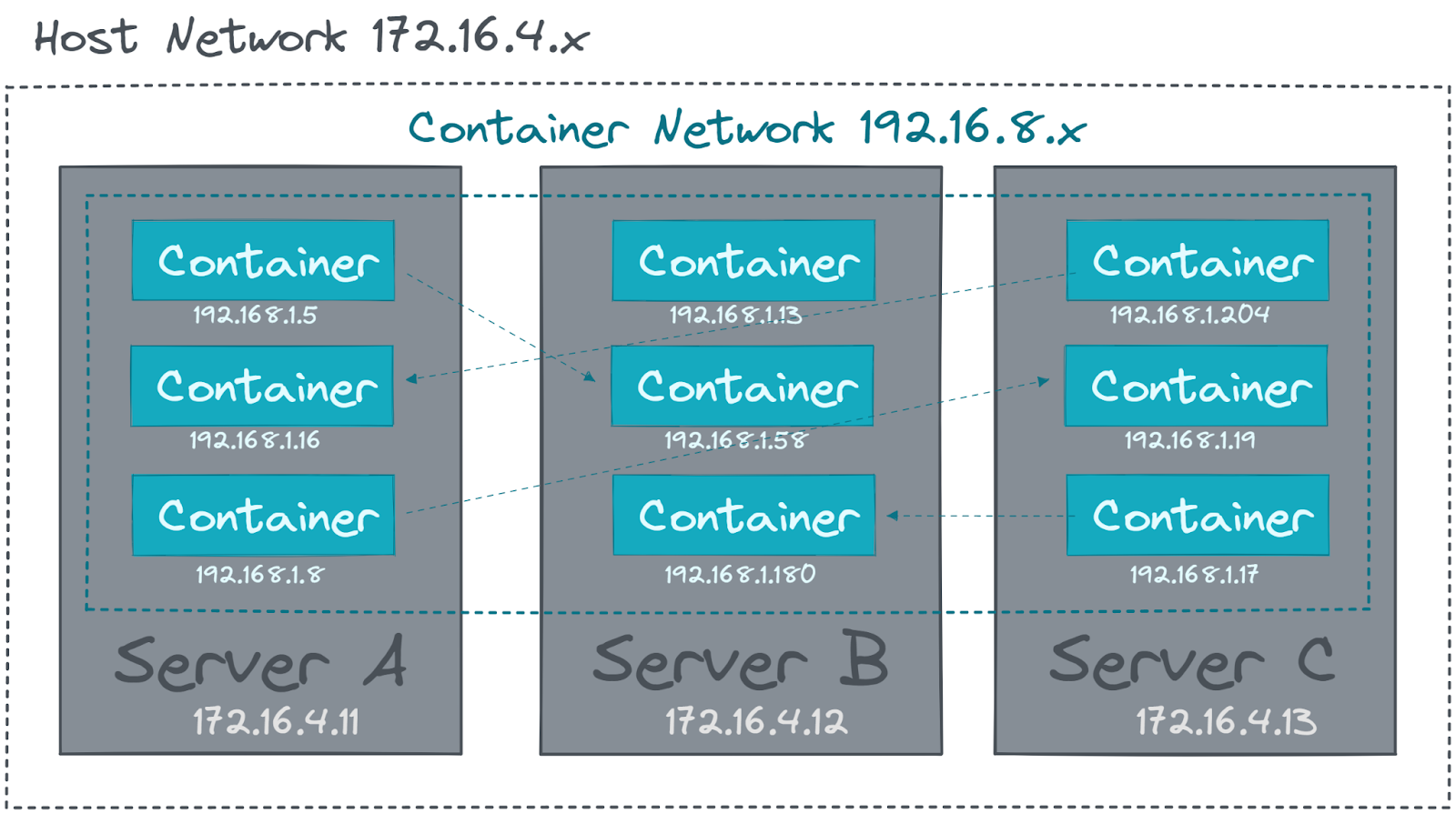
But what if your containers are spread across different hosts or servers? That's where overlay networks come in. They create a virtual network that spans all the hosts, allowing containers to communicate as if they were on the same physical network. It simplifies networking by hiding the complexity of connecting containers across different servers.
Overlay Networks and IP Management:
One of the big jobs of overlay networks is managing IP addresses. Without them, administrators would have to manually assign IPs and set up routes for traffic. Overlay networks automate this, ensuring containers can talk to each other without manual setup for each new container.
Container Network Interface (CNI):
The tech behind most container networking today is called the Container Network Interface (CNI). CNI is a standard for developing plugins that handle networking for containers, making it easier to switch out networking setups without getting locked into one way of doing things. This flexibility is crucial for adapting to different needs and technologies in container orchestration platforms.
In essence, networking in microservices is about ensuring all these independent services can easily communicate, regardless of where they're hosted. With technologies like CNI and concepts like overlay networks, the complex web of container communication is made manageable, allowing microservices to thrive.
Last updated