
Pod Concept
Pods are the cornerstone of the Kubernetes ecosystem, embodying the smallest deployable units that encapsulate one or more containers. They play a critical role in defining how applications run within a Kubernetes cluster. Here, we'll break down the Pod concept to understand its significance and functionalities better.
Understanding Pods
What is a Pod?
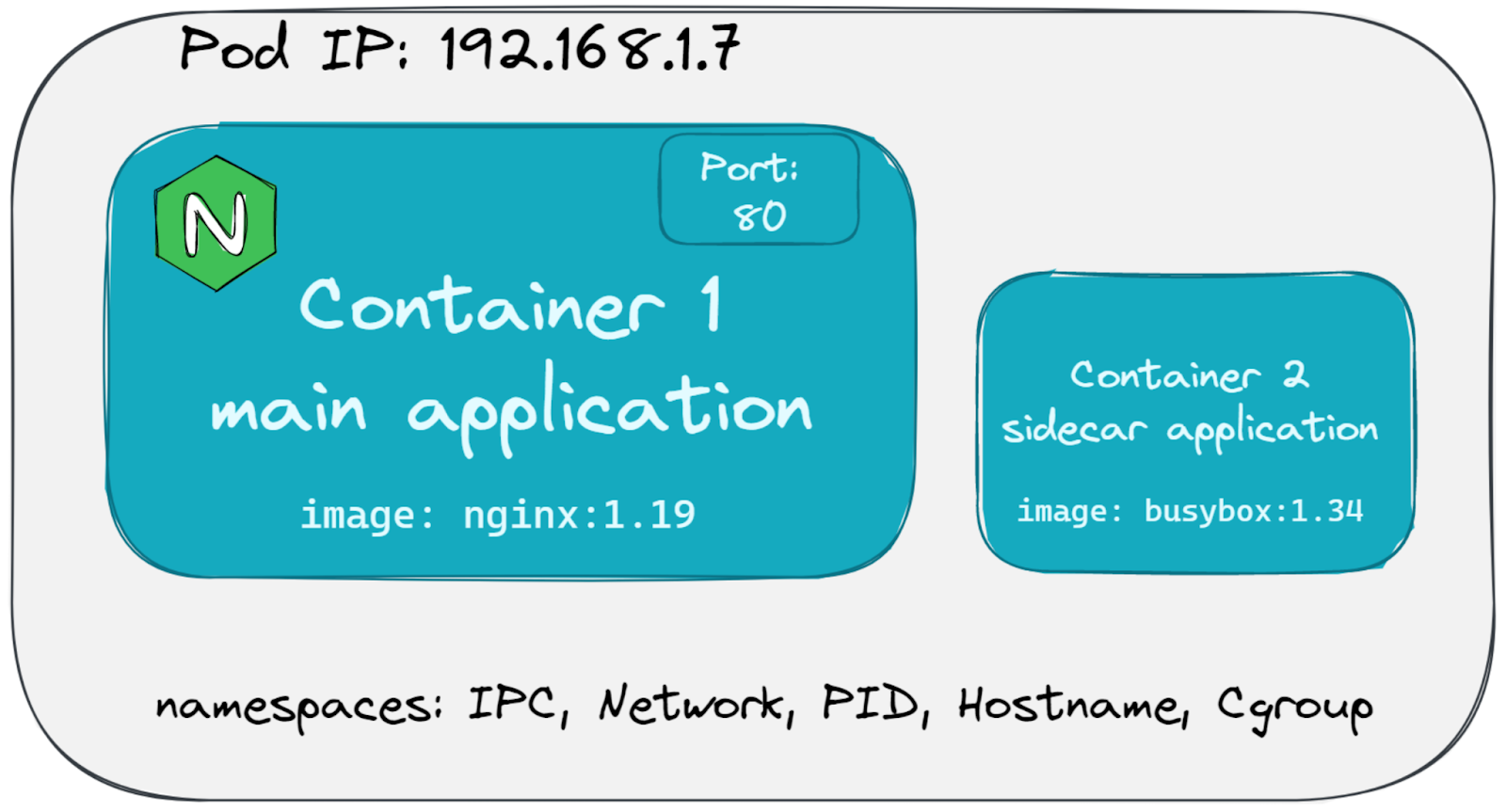
A Pod in Kubernetes is essentially a group of one or more containers that are deployed together on the same host. These containers share the same network namespace, meaning they have the same IP address and port space, and can also share storage. This setup allows containers within the same Pod to communicate directly and efficiently.
Why Pods?
The Pod model facilitates running tightly coupled application components together, such as an application server and its cache, ensuring they have access to the same resources and are managed as a single entity. This approach simplifies networking, storage, and dependency management.
Example of a Simple Pod with Two Containers:
This example showcases a Pod running an Nginx container alongside a BusyBox container, demonstrating the flexibility to support complex applications.
Sidecar Containers:
A sidecar container is an auxiliary container that enhances or assists the main container in a Pod. This pattern is useful for logging, monitoring, or any other service that supports the primary application.
Init Containers:
For tasks that need to run before the application starts (like setting up the environment), Kubernetes offers initContainers. These containers run to completion before the main application containers start.
Key Pod Settings:
Resources: Manage CPU and memory requests and limits for each container in a Pod.
LivenessProbe: Configure health checks to ensure your application is running as expected. Kubernetes can restart containers if these checks fail.
SecurityContext: Define security-related settings, including user and group IDs and kernel capabilities.
Pods are a fundamental part of Kubernetes, providing a flexible and powerful way to run your applications. By grouping containers into Pods, Kubernetes enables efficient resource sharing and communication. Understanding how to configure and use Pods effectively is crucial for anyone working with Kubernetes.
Last updated